


Views: 0 Author: Site Editor Publish Time: 2026-11-18 Origin: Site


Applying tack coat is critical for structural bonding between asphalt layers. However, pairing the wrong emulsion with your equipment leads to clogged lines, pump failure, and costly project delays. The asphalt paving industry offers multiple emulsion formulations. You will encounter anionic, cationic, slow-setting, and trackless options on job sites. Each chemical makeup features distinct viscosity, breaking times, and temperature requirements. When these chemical traits clash against mechanical limits, paving operations grind to a halt.
Selecting the right emulsion goes far beyond reading the paving specification. It requires evaluating your specific tack coat sprayer capabilities. You must inspect everything from pump mechanics to heating systems. Doing so ensures consistent application and prevents equipment downtime. In this guide, we will break down emulsion categories. You will learn how to match hardware to chemistry, avoid dilution disasters, and keep your paving crew moving efficiently.
Hardware dictates chemistry: Slow-setting emulsions (SS-1h, CSS-1h) are highly compatible with unheated or standard sprayers, while polymer-modified or trackless tacks require dedicated, heated equipment.
Dilution risks: Improper dilution practices (e.g., wrong water temperature or hard water) can prematurely break the emulsion inside the pump, destroying the equipment.
Pump constraints: Gear pumps can shear certain rapid-setting emulsions if not properly calibrated; diaphragm systems often handle delicate emulsion chemistries better.
Maintenance is mandatory: Regardless of the emulsion chosen, daily line flushing is non-negotiable for a handheld bitumen emulsion sprayer to prevent nozzle blockage.
Choosing an incompatible emulsion for your machinery creates a ripple effect of operational failures. These failures extend far beyond a simple clogged hose. They impact your bottom line, project timelines, and legal liability.
Failing to achieve the correct residual asphalt rate compromises pavement structural integrity. Sprayer blockages create uneven coverage across the milled surface. This missing bond layer causes slippage between asphalt lifts. Core testing will quickly reveal these delamination issues. Contractors then face severe liability for premature road failure. You may have to mill and repave the entire section at your own expense. Consistent spray patterns are your primary defense against these catastrophic failures.
Asphalt emulsions are delicate chemical suspensions. They blend microscopic asphalt droplets into water using a chemical emulsifying agent. Forcing a high-viscosity or cold emulsion through an incompatible pump often "shears" the liquid. This mechanical stress separates the asphalt and water prematurely. The asphalt instantly solidifies inside your plumbing. You then have to chisel hardened blocks out of your machinery. Replacing seized pumps and ruptured hoses destroys your maintenance budget.
A plugged wand stops the entire paving crew in its tracks. A seized pump on an emulsion asphalt sprayer kills daily productivity. Paving halts while trucks full of hot mix sit waiting. The asphalt cools down, potentially falling below acceptable compaction temperatures. Idle labor costs quickly mount into thousands of dollars per hour. Lost materials compound these financial hits. Proper equipment alignment prevents these massive operational losses.
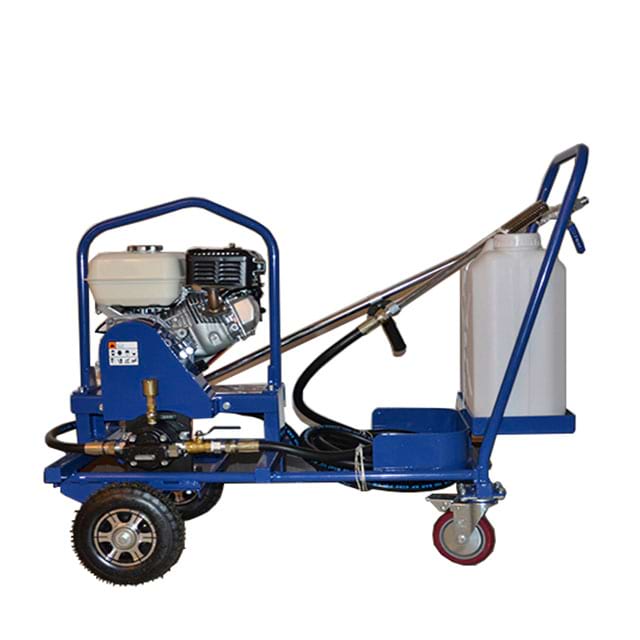
Asphalt emulsions fall into distinct categories based on their setting speed and chemical charge. Each one behaves differently under pressure and heat. Understanding these traits helps you protect your equipment.
These remain the industry standard for general tack coating. Municipalities and private contractors rely on them heavily for routine paving. They offer excellent stability and extended workability.
Sprayer compatibility is exceptionally high. You can apply them at lower temperatures ranging from 70°F to 160°F. They are highly forgiving in standard, unheated tote sprayers. The slow-setting nature means they will not harden instantly if the pump stops momentarily.
Crews frequently dilute them 1:1 with water. This dilution improves spray fan consistency and coverage. However, diluted mixtures require adequate drying time before paving. You must wait for the water to evaporate entirely. Paving over unbroken emulsion traps moisture, leading to pavement blistering.
These excel in chip sealing operations. High-traffic areas also demand them because a fast "break" is required. They cure quickly, allowing traffic to resume sooner.
Sprayer compatibility ranges from moderate to low. These liquids carry higher viscosities. You generally cannot dilute them. They demand robust, heated sprayer systems. You must maintain strict temperature bands between 125°F and 185°F. Dropping below this range causes the emulsion to thicken dramatically.
Applying them requires extreme caution. You face a high risk of clogging a basic handheld bitumen emulsion sprayer if the wand cools down. Pauses in application allow the rapid-setting chemicals to harden inside the nozzle. Continuous flow is essential when spraying these aggressive formulations.
High-traffic urban projects use these to prevent tack transfer to vehicle tires. They keep adjacent roads clean and eliminate tracking complaints from local businesses. They cure into a hard, non-sticky surface.
Sprayer compatibility is incredibly strict. Manufacturers formulate them using hard base asphalts. They require specialized sprayers featuring superior heating capabilities. Crews often apply them near 160°F to 180°F. Constant recirculation is mandatory to prevent the hard asphalt from separating.
Claims of "zero tracking" are only valid under perfect conditions. Your sprayer must maintain exact application rates. Nozzle sputtering ruins the non-tracking effect. Applying too much material creates puddles that will still track onto nearby streets.
Emulsion and Sprayer Compatibility Summary
| Emulsion Category | Typical Use Case | Sprayer Compatibility | Required Temperature |
|---|---|---|---|
| Slow-Setting (SS-1h) | General paving, patching | High (Unheated/Standard) | 70°F - 160°F |
| Rapid-Setting (CRS-2P) | Chip seal, fast-cure areas | Moderate (Heated required) | 125°F - 185°F |
| Trackless Tack | Urban roads, high traffic | Strict (High heat/Recirculation) | 160°F - 180°F |
Matching chemistry to hardware requires a deep dive into your machine's components. You cannot judge a sprayer by its tank capacity alone. The internal mechanics dictate what chemicals you can safely spray.
Evaluate your pump type carefully before loading any emulsion. Sprayers typically use gear, centrifugal, or diaphragm pumps. Centrifugal and gear pumps can cause high shear. They use tight mechanical tolerances to move the liquid. This mechanical action makes them risky for sensitive cationic emulsions. If flow rates are mismatched, the emulsion breaks inside the housing. Diaphragm pumps handle delicate chemistries much better. They push the liquid gently using pulsating membranes. This prevents the asphalt droplets from grinding together and solidifying.
Assess your heat source thoroughly. Sprayers rely on direct fire flue tubes, electric blankets, or heat exchangers. Emulsions are incredibly heat-sensitive. Localized overheating boils the water out of the suspension. This leaves hardened asphalt blocks stuck to the bottom of the tank. Electric blankets provide gentle, even heat across a large surface area. Direct fire systems require constant monitoring to prevent scorching. Always keep the emulsion circulating while the burners are active.
Bottom-of-funnel buyers must scrutinize tank features. Ensure your prospective sprayer features continuous tank circulation. This prevents the emulsion from settling during transport. It also stops the liquid from skinning over when exposed to air. Stagnant emulsion separates quickly. A robust recirculation loop keeps the mixture homogenous. It also ensures even temperature distribution throughout the entire tank.
Follow these steps when evaluating your hardware:
Identify the pump type to assess mechanical shear risk.
Verify the heating mechanism for even temperature distribution.
Confirm continuous recirculation capabilities to prevent settling.
Check internal seal compatibility with your chosen emulsion chemistry.
Inspect the filtration system to catch hardened asphalt particles.
Field execution determines the success of your tack coat application. Even the best equipment fails if operators ignore basic chemical rules. Dilution and application rates require strict attention to detail.
Diluting an SS-1h or CSS-1h requires strict protocols. Always add water to the emulsion. Never add emulsion to water. Reversing this order causes shock-breaking. The sudden change in chemical concentration destroys the emulsifier. Verify your local water hardness before mixing. Mineral-heavy water contains calcium and magnesium. These minerals can neutralize emulsion emulsifiers. This chemical clash ruins the batch instantly. Use potable, temperature-matched water for the best results.
State and NCHRP specifications dictate strict coverage requirements. You typically need 0.04 to 0.08 gallons per square yard residual. Residual rate refers to the asphalt remaining after the water evaporates. Your sprayer's pressure must align perfectly with the diluted viscosity. Nozzle size plays a massive role here. Mismatched nozzles create uneven spray fans. Too much pressure causes atomization and drifting. Too little pressure creates heavy streaks on the pavement.
Hand application requires precision and steady movement. For a handheld bitumen emulsion sprayer, utilize V-jet nozzles. They provide a clean, overlapping fan pattern. Maintain a consistent wand height above the pavement. Sweeping the wand too high causes the wind to blow the tack away. Keep spare nozzles soaking in a solvent bucket on the job site. This allows for rapid swaps if sputtering occurs. Never try to clear a clogged nozzle with a wire. This ruins the precision brass opening.
Common application mistakes to avoid:
Using cold water to dilute warm emulsion, causing thermal shock.
Failing to measure residual rates after applying a diluted mixture.
Holding the spray wand at inconsistent angles during application.
Ignoring daily nozzle cleaning routines at the end of the shift.
Choosing the right equipment depends entirely on your typical project scope. Overbuying wastes capital, while underbuying leads to constant breakdowns. Align your purchase with your daily operational needs.
Stick to SS-1h or CSS-1h emulsions. Pair these with a reliable, unheated tote-based sprayer. Lightly heated models also work exceptionally well. Focus heavily on ease of cleaning. Portability matters most for pothole patching and driveway repairs. You want a system that fits easily into a pickup bed. Look for simple flush systems that use minimal solvent. Complex computer controls are unnecessary for these small-scale applications.
Opt for un-diluted CRS-2P or trackless tack. These advanced materials necessitate serious hardware. You must invest in a high-capacity, thermostatically controlled emulsion asphalt sprayer. Computer-controlled application rates are essential. They guarantee compliance with strict Department of Transportation standards. These units automatically adjust pump flow based on vehicle speed. This ensures perfect coverage regardless of how fast the truck drives. Robust heating flues and heavy-duty recirculation pumps are mandatory.
Review your local DOT material requirements first. Specifications vary wildly between different regions and climates. Then, consult with your equipment manufacturer. Verify pump and seal compatibility. Do this before finalizing your emulsion supply contract. A proactive conversation prevents expensive equipment failures later. Ask for a demonstration using the exact emulsion you plan to spray. Real-world testing reveals flaws that brochures hide.
The ideal tack coat emulsion meets project specifications while matching your sprayer’s thermal and mechanical limits. You cannot force a high-tech trackless tack through a basic, unheated tote. Understanding the chemical behavior of slow-setting and rapid-setting emulsions protects your machinery. It also guarantees a stronger bond between your asphalt layers.
Prioritize equipment offering robust recirculation. Easy clean-out features save hours of labor and prevent morning delays. Always conduct a small-scale spray test when switching emulsion chemistries. This ensures pump compatibility. It also verifies break times under realistic site conditions. Protect your machinery, train your crew on proper dilution, and your paving projects will proceed flawlessly.
A: No. Unless your sprayer has a thermostatically controlled heating system and continuous recirculation, leaving emulsion overnight risks it breaking or freezing. This leads to severe blockages. Always flush lines at the end of the shift.
A: Sputtering is typically caused by a clogged nozzle, cold emulsion that has become too viscous, or air entering the pump intake. Verify your tank temperature and swap to a clean nozzle.
A: Anionic (negatively charged) and cationic (positively charged) emulsions function similarly in the hardware. However, mixing them in the same tank without a thorough flush causes an immediate chemical reaction. This solidifies the asphalt inside your sprayer.
A: Usually no. Cutback asphalts contain volatile solvents like kerosene. These solvents degrade standard rubber seals and hoses designed strictly for water-based emulsions. Always verify seal compatibility with your manufacturer.


