


Views: 0 Author: Site Editor Publish Time: 2026-10-23 Origin: Site


Applying an asphalt patch over an improperly cured tack coat causes severe damage over time. It leads to delamination, slippage, and premature pavement failure. Many paving crews still treat tack coat application as an afterthought. However, the timing between spraying the emulsion and laying the hot mix represents a critical quality control metric. Guessing readiness often traps moisture beneath the new asphalt layer. This trapped moisture destroys the structural bond completely. Determining exactly when the tack coat is ready requires deep practical understanding. You must grasp the chemical transition of the emulsion itself. You must also account for environmental variables and application equipment precision. We will explore how crews can standardize tack coat application effectively. You will learn to properly assess curing stages in the field. For contractors and municipal crews evaluating pavement maintenance operations, mastering this workflow remains vital. Standardizing how tack coat is applied and assessed is a vital step toward reducing callback rates and optimizing equipment usage.
Chemical Transition: Readiness is defined by the shift from "breaking" (water evaporation begins) to "curing" (water has fully evaporated), changing the emulsion from brown to sticky black.
Application Precision: Over-application or pooling significantly delays cure times; a high-quality emulsion asphalt sprayer is required for a uniform, fast-curing layer.
Equipment Scalability: Selecting the right equipment—from a handheld bitumen emulsion sprayer for localized repairs to larger commercial units—dictates operational efficiency and material consistency.
Risk Mitigation: Applying hot mix over unbroken tack traps moisture, leading to internal stripping and eventual patch failure.
Crews guessing on readiness often pave too early. They usually do this to save time during tight municipal shifts. This rushed approach results in structural failures eventually. These structural failures cost much more in rework than any initial time saved. Rework eats into profit margins aggressively. It also damages your reputation among clients and local agencies.
Uncured asphalt emulsion acts as a complex chemical suspension. It is a precise mixture of asphalt cement, water, and a specific emulsifying agent. When first applied to the pavement, it appears milky brown. The water acts as a carrier vehicle for the heavy asphalt molecules. As this water begins to evaporate, the chemical emulsion "breaks." This breaking phase indicates the initial separation of water and asphalt. The material starts losing its brown color rapidly during this stage.
The tack coat is only ready for paving when it has fully cured. Curing represents the absolute final stage of the chemical transition. This means all residual moisture has completely evaporated from the applied layer. It leaves behind a residual asphalt film on the substrate. This pure film acts as the primary bonding glue between pavement layers. If you pave before curing completes, you trap water beneath the hot mix. Heat turns this water into steam, forcing the layers apart.
Paving operations should only commence once the curing phase is 100% complete. This strict timing ensures a true structural bond between the existing pavement and the new asphalt patch. You must train your team to recognize this physical distinction clearly. They must never confuse breaking with curing. Breaking is just the beginning. Curing guarantees patching success.
The most reliable visual metric for readiness is color. The tack coat must transition entirely from a milky brown to a solid, uniform black. You must inspect the applied area closely before bringing in the asphalt. Any remaining brown spots clearly indicate trapped moisture. Even small brown puddles mean the patch area is not ready. The black color should look highly glossy initially, then turn slightly dull as it finishes curing.
Visual checks are extremely helpful, but physical confirmation remains necessary. A properly cured tack coat will feel highly tacky or sticky to the touch. You can test it lightly with a gloved finger or the toe of a clean work boot. It should feel like gripping tape. However, the material will not pull away from the pavement surface. It should not transfer heavily to your glove or boot. If thick black strings pull up, it needs more time.
Cure time is never static on any job site. It depends entirely on ambient temperature, humidity levels, wind speed, and surface temperature. In optimal conditions, curing may take 15 to 45 minutes. In high humidity or low temperatures, it can easily take over an hour. Wind generally accelerates evaporation. High humidity heavily suppresses evaporation rates. You must constantly adjust your scheduling based on the daily weather forecast.
Table: Estimated Tack Coat Curing Times Based on Environmental Conditions
| Condition Profile | Ambient Temp (°F) | Humidity Level | Estimated Cure Time |
|---|---|---|---|
| Optimal / Fast | 80°F+ | Below 30% | 15 - 30 minutes |
| Moderate / Standard | 65°F - 79°F | 30% - 50% | 30 - 45 minutes |
| Sub-optimal / Slow | 50°F - 64°F | 51% - 75% | 45 - 60+ minutes |
| Poor / Delayed | Below 50°F | Above 75% | 60 - 120+ minutes |
The speed at which a tack coat cures links directly to application uniformity. The material must cover the surface evenly across the entire patch box. Thick spots or deep puddles will take exponentially longer to cure than the surrounding areas. If a thick puddle takes 90 minutes to cure, the entire patch must wait 90 minutes. You cannot safely pave over the wet puddle just because the edges are dry.
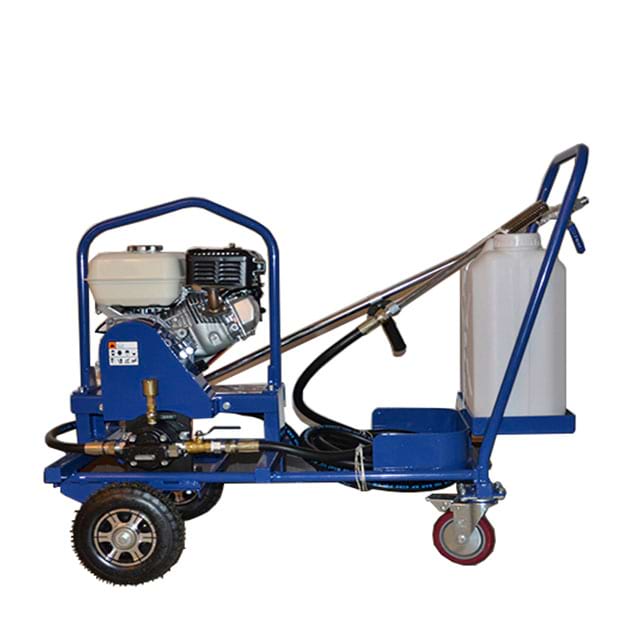
Pouring tack straight from a bucket creates massive inconsistencies. Using a degraded, dripping spray wand leads to the exact same problem. You get unpredictable thicknesses across the patch zone. A commercial-grade emulsion asphalt sprayer atomizes the liquid properly. Atomization forcefully breaks the thick liquid into tiny droplets. These droplets create a consistent, thin layer across the rough substrate. A thin, uniform layer cures rapidly and highly predictably. It eliminates the deep puddles that inevitably stall paving operations.
Standardizing application through calibrated sprayers transforms your job site entirely. It allows project managers to accurately estimate curing wait times. If you know the sprayer applies an exact millage, you can calculate the delay. This precision tightens operational schedules significantly. It reduces crew idle time spent staring at wet emulsion. Your team can easily prep the next pothole while the first one cures on a known timeline.
You should always maintain a consistent wand height for best results. Hold the nozzle about 12 inches from the surface. Sweep your arm smoothly across the area. Overlap each pass slightly to prevent bare streaks. Do not let the liquid pool in the deep corners of a milled patch.
Choosing the correct equipment dictates your overall operational efficiency. You must actively match the machine to your average job size.
First, you have Manual or Gravity Systems. These setups have a very low upfront cost. However, they carry a high risk of uneven application and heavy material waste. They often pour way too much liquid.
Second, consider a handheld bitumen emulsion sprayer. This tool is absolutely ideal for smaller crews. It works perfectly for localized patching and maneuvering in tight urban spaces. It offers high mobility and significantly better precision than manual pouring.
Third, evaluate Tow-Behind or Skid-Mounted Sprayers. These massive units are strictly required for high-volume municipal patching or large overlay projects. They feature large heated tanks and highly pressurized wands to handle continuous output.
When selecting your gear, evaluate these key dimensions carefully:
Nozzle and Pressure Consistency: You must look for systems that maintain steady PSI. Steady pressure prevents the spray wand from sputtering. Sputtering causes uneven curing and patchy bonds.
Heating Capabilities: Cold emulsions clog hose systems quickly. They also spray very unevenly. Evaluate units with reliable, safe heating elements. You need to maintain the emulsion at the manufacturer's specified spray temperature safely.
Maintenance and Flushing: Emulsions are notoriously difficult to clean. They harden into a stubborn, sticky residue. Prioritize sprayers with integrated solvent flushing systems. You need this feature to prevent wand and pump blockages between different jobs.
Base your procurement decision directly on your crew's average daily patch volume. A small crew fixing isolated potholes strongly needs mobility. A large crew paving miles of trenches needs volume. You must also consider the chemical makeup of the tack coats you use most frequently. Rapid-setting emulsions require careful handling compared to slow-setting types.
Even with perfect curing, application errors cause massive failures. You must actively avoid these common field mistakes to protect your work.
Allowing vehicle or foot traffic over cured tack coat ruins the bond. The heavy tires or boots will strip the sticky material right off the substrate. This issue is called tracking. Tracking leaves absolutely no bond for the incoming hot mix. You must use traffic cones and barricades to protect the sprayed area completely.
Spraying tack coat on a dirty, un-swept surface remains a major error. The emulsion bonds directly to the loose dust, not the solid pavement beneath. When the hot mix goes down, it sticks to a floating layer of dirt. Always mill, sweep, and forcefully blow the patch area clean before spraying anything.
Some crews field-dilute their emulsion with water. They do this to make it spray easier through substandard or clogged equipment. This terrible practice alters the chemical break time unpredictably. It also drastically reduces the residual asphalt content. This completely compromises the final structural bond.
Common mistakes you must watch out for:
Applying tack coat during active rain or immediately after heavy showers.
Failing to flush the sprayer lines at the end of the work shift.
Spraying the vertical edges of a pothole too lightly.
Using expired emulsion that has separated in the storage drum.
Determining exactly when a tack coat is ready requires diligence. It is a matter of clear visual confirmation, watching it turn from milky brown to black. It also requires tactile feedback to ensure it feels sticky, not wet. However, the predictability and speed of that curing process rely entirely on applying a uniform layer. For paving contractors focused on eliminating rework, upgrading equipment matters. Moving from crude application methods to a calibrated spraying system is a necessary operational step. By evaluating your typical job size, you make far better equipment choices. Whether your work calls for a highly mobile handheld unit or a larger heated system, precision matters greatly. You can ensure precise applications, achieve faster cure times, and build structurally sound asphalt patches. Your teams will work faster, and your pavement repairs will last significantly longer.
A: Under ideal conditions (warm temperatures, low humidity, and a dry surface), tack coat can cure in 15 to 45 minutes. High humidity, cold weather, or overly thick application will significantly extend this time.
A: No. A brown color indicates that the emulsion has not fully broken and water is still trapped in the mixture. Paving over it will trap steam, preventing the layers from bonding and leading to early pavement failure.
A: Sputtering is typically caused by clogged nozzles, a loss of system pressure, or spraying emulsion that is too cold. Ensure your equipment is properly heated to the emulsion manufacturer's specifications and utilize the sprayer's flush system after every use.
A: Yes. For localized patching and standard pothole repairs, a handheld unit provides the necessary pressure and atomization to achieve a uniform coat without the footprint and expense of a large distributor truck.


