


Views: 0 Author: Site Editor Publish Time: 2026-11-04 Origin: Site


Bidding on a pavement maintenance project requires extreme precision to protect your profit margins. Guessing material quantities sets you up for immediate failure on the job site. Inaccurate material estimation leads directly to severe margin erosion. Under-estimating stalls production while your crew waits for costly emergency deliveries. Conversely, over-estimating locks up essential operating capital in unused, depreciating inventory.
The reality of pavement maintenance complicates the estimation process significantly. Crack profiles are rarely uniform across an entire road surface. Theoretical calculations must always undergo rigorous adjustments for harsh real-world field conditions. You cannot rely on a simple math equation alone to purchase your supplies.
This guide provides a highly reliable framework for calculating exact material requirements. We will show you how to systematically adjust for unpredictable job-site variables. You will also learn how to align material choices perfectly with your specific application equipment to maximize daily productivity.
Baseline estimates require measuring linear footage, average crack width, and average crack depth.
Standard formulas must be adjusted with a 10% to 15% waste and variance factor to account for irregular crack profiles and over-banding.
Selecting the correct specification of asphalt crack sealant (e.g., ASTM D6690 types) is just as critical as quantity, as climate directly dictates material performance.
Estimates must align with the daily capacity of your asphalt crack filling equipment to accurately project labor and project timelines.
Before stepping onto the job site, you must define your success criteria. Establishing a mathematical baseline gives you a reliable starting point. You must calculate the perfect, theoretical volume of material required before you apply any real-world field variables. This initial calculation prevents wild guessing and gives your purchasing team a concrete number to reference.
To find your baseline, you need to calculate the total cubic inches of the voids you plan to fill. This requires accurate measurements taken directly from the pavement. Do not guess these dimensions. Walk the site and take average measurements across several different sections.
Follow these specific steps to calculate your initial volume:
Measure Average Crack Width: Record the width in inches. For example, use 0.5 inches for a standard routed crack.
Measure Average Crack Depth: Record the depth in inches. Again, a standard routed reservoir is often 0.5 inches deep.
Measure Total Linear Footage: Walk the site with a measuring wheel. Record the total length of all cracks in feet. Multiply this number by 12 to convert it into total linear inches.
Apply the Volume Formula: Multiply Width × Depth × Length (in inches) to determine your Total Cubic Inches.
Once you have the total volume in cubic inches, you must convert it into weight. Material suppliers sell asphalt crack sealant by the pound, not by the cubic inch. The industry standard dictates one cubic inch of solid sealant weighs approximately 0.043 pounds. Be aware this multiplier varies slightly based on the specific gravity of the manufacturer's formulation.
Multiply your Total Cubic Inches by 0.043 to find your Baseline Pounds Required. If you prefer working in gallons, remember most solid blocks yield roughly 9.5 to 10 pounds per liquid gallon once fully melted.
| Measurement Type | Conversion Factor | Application Context |
|---|---|---|
| Cubic Inches to Pounds | Volume × 0.043 | Standard industry multiplier for solid sealant blocks. |
| Pounds to Gallons (Liquid) | Pounds ÷ 9.5 (avg) | Determining melter capacity requirements. |
| Linear Feet to Inches | Feet × 12 | Standardizing all measurements for the volume formula. |
Theoretical math rarely matches your final purchase order. Implementation realities always distort perfect calculations. Pavement behaves unpredictably, and human operators introduce natural inconsistencies during application. You must adjust your baseline formula to reflect these field variables.
The over-banding factor drastically alters material consumption. Over-banding involves using a squeegee to spread a thin layer of material over the top of the crack. This technique creates a protective seal on the pavement surface. Applying a 1/8-inch thick by 2-inch to 3-inch wide squeegee over-band increases your material consumption by up to 30%. If your project specification requires over-banding, you must multiply your baseline weight by 1.3 immediately.
Routing and preparation also dictate how much material you will ultimately use. Routing involves using a mechanical router to cut a uniform reservoir into the pavement. A standard routed reservoir usually measures 1/2-inch by 1/2-inch. This mechanical process makes your baseline calculations significantly more accurate. You remove the unpredictability of jagged edges.
Conversely, non-routed cracks require much higher variance buffers. What to watch out for: Non-routed cracks often hide large subsurface voids. The material will flow deep into the pavement base, consuming far more product than your surface measurements suggest.
Standard industry practice requires adding a comprehensive waste factor to every estimate. You should always include a 10% to 15% contingency on top of your adjusted calculations.
This vital waste factor accounts for:
Material spilled during transfer from the melter to the pouring pot.
Residue left hardening inside the melting vat at the end of the shift.
Operator inconsistency when moving the wand too slowly over the pavement.
Unexpectedly deep subsurface voids hidden beneath narrow surface cracks.
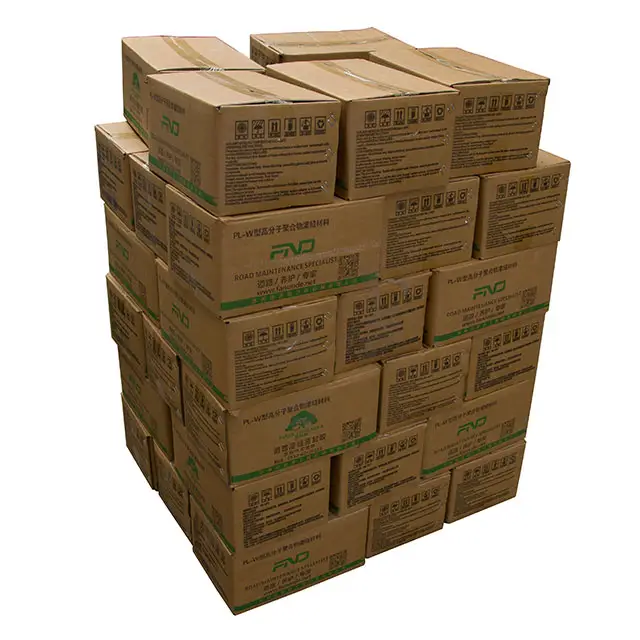
Understanding solution categories prevents costly application failures. Not all materials yield identically, and they certainly do not perform identically. Your selection impacts the total volume required, project compliance, and the long-term durability of the repair.
Climate and compliance represent your primary evaluation dimensions. You must review ASTM D6690 specifications to ensure the product matches your regional freeze-thaw cycles. Using a stiff material in a region experiencing harsh winters leads to immediate cohesive failure. The material will snap under thermal contraction. You must select a hot-pour asphalt crack sealant engineered specifically for your environmental conditions.
You also need to verify direct-fire versus indirect-fire compatibility. Some advanced polymer-modified materials require indirect heating (oil-jacketed). Exposing them to direct flames destroys the polymers and ruins the batch.
| ASTM D6690 Type | Climate Suitability | Performance Characteristics |
|---|---|---|
| Type I | Moderate Climates | Minimal freeze-thaw cycles. Low movement expectations. |
| Type II | Standard Climates | Moderate expansion and contraction. Standard commercial use. |
| Type III | Cold Climates | High thermal movement. Excellent low-temperature flexibility. |
| Type IV | Extreme Cold Climates | Very high movement. Survives extreme structural thermal shifts. |
Traffic volume considerations dictate material stiffness. High-traffic highways require stiffer, tracking-resistant formulations. If you use a soft, highly flexible material on an interstate highway in the summer, vehicle tires will pull it entirely out of the void. Low-volume parking lots tolerate softer materials perfectly fine.
Finally, consider scalability. We highly recommend standardizing your material choices across multiple municipal contracts. Standardization allows you to secure bulk pallet pricing. Purchasing by the truckload significantly reduces your per-pound material costs and improves your overall bid competitiveness.
Material quantity represents only half of your estimation equation. Equipment to outcome alignment dictates your actual profitability. You can calculate the perfect amount of material, but if your application rate is painfully slow, labor costs will consume your entire profit margin.
You must rigorously compare your melter capacity against your required linear footage. Matching your daily material requirements with the melt rate of your asphalt crack filling equipment guarantees smooth operations. A common mistake involves ignoring the melter's recovery time. If your crew empties the vat faster than new blocks can melt, production stops.
Consider this significant risk: Putting a 100-gallon melter on a project requiring 400 gallons per day creates an expensive labor bottleneck. Your crew will spend hours standing around waiting for solid blocks to liquefy. Your estimate must account for the specific throughput capabilities of the machinery on site.
The choice between direct-fire and oil-jacketed systems also impacts your estimate. Direct-fire equipment limits your material choices to very specific non-polymer formulations. These machines heat faster but carry a high risk of scorching the material if operators lose focus.
Conversely, utilizing a high-capacity pavement crack sealing machine equipped with oil-jacketed vats and electrically heated hoses drastically improves efficiency. Heated hoses reduce material waste by eliminating frequent clogs and line purges. This advanced technology significantly increases the linear feet sealed per hour, allowing you to tighten your labor estimates confidently.
Transitioning from mathematical calculation to actual procurement requires a clear decision framework. You need to finalize your numbers and lock in your supply chain to protect your bid pricing.
Establish strict supplier evaluation criteria. First, look at the pallet weight yield. Most manufacturers package material in pallets weighing between 2,000 and 2,250 pounds. Ensure you order in full pallet increments whenever possible to avoid breaking fees. Next, meticulously analyze freight costs and localized availability. Freight acts as a massive hidden variable. Shipping heavy pallets across the country can drastically alter your final per-pound cost, turning a cheap product into an expensive liability.
Execute these next-step actions before submitting your final estimate:
Conduct a mandatory site walk: Never bid a large job from satellite imagery alone. Walk the site to verify your sample measurements and identify deep subsidence areas.
Run calculations with a 15% buffer: Apply the maximum waste factor to your baseline volume to ensure you never run out of material on a Friday afternoon.
Request Material Safety Data Sheets (MSDS): Ask shortlisted manufacturers for yield specifications. Verify the exact specific gravity factors so your volume-to-weight math remains flawless.
Standardizing this procurement workflow prevents chaotic, last-minute ordering. It keeps your inventory lean while ensuring crews always have exactly what they need to maintain momentum.
Accurate material estimation serves as the absolute foundation of a profitable pavement maintenance project. You must diligently measure linear footage, apply the baseline formula, and heavily adjust for field realities like over-banding and subsurface voids. Matching your chosen material volume with the correct melter capacity prevents devastating labor bottlenecks on the job site.
We highly recommend standardizing your estimation template based on the formulas provided in this guide. Building a reliable spreadsheet protects your profit margins on all future bids. Predictability drives profitability in this industry.
Before finalizing large municipal or commercial purchase orders, always consult directly with an equipment or material specialist. Having a second set of eyes review your calculations ensures you factor in regional climate demands and specific gravity nuances accurately.
A: Coverage depends strictly on crack dimensions. For a standard 1/2-inch by 1/2-inch routed crack with absolutely no over-band applied, a 30 lb box yields approximately 230 to 250 linear feet. Deep subsurface voids will lower this yield significantly.
A: Yes. Over-banding involves leaving a thin protective layer of material on the pavement surface. This technique can easily increase material consumption by 20% to 30%, depending heavily on the width of the squeegee used by the operator.
A: Yes, direct-fire sealants can be melted safely in oil-jacketed equipment. However, the reverse is never true. Oil-jacketed sealants contain highly sensitive polymers. These polymers will be completely destroyed if processed inside a direct-fire melter.
A: Contractors typically add a 10% to 15% buffer to their final volume calculation. This standard waste percentage accounts for melter residue, accidental spills, irregular pavement depths, and natural variations in operator application speeds.


