


Views: 0 Author: Site Editor Publish Time: 2026-05-13 Origin: Site


Work zone fatalities hit a devastating 10-year high in 2022. Across the United States, 891 people lost their lives in highway construction areas. Distracted driving and heavy infotainment use primarily drive this alarming trend. Traditional static barriers are simply too slow to deploy for mobile operations. They leave workers dangerously exposed to catastrophic rear-end collisions.
Enter the shadow vehicle. The Truck Mounted Attenuator—also known in the industry as a crash cushion—acts as a mobile crumple zone. It forms a physical fortress between errant drivers and vulnerable crews working on active roadways. For procurement managers and safety directors, investing in this equipment goes far beyond mere regulatory compliance. It serves as a measurable strategy for preserving life and maintaining traffic flow. It also aggressively reduces corporate liability. You will learn the engineering mechanics behind these life-saving devices, understand their operational advantages, and discover how to properly implement them to protect your most valuable assets on the job site.
Lethal Energy Dispersion: TMAs convert high-speed kinetic energy into controlled structural deformation, significantly reducing deadly G-forces for both crews and errant drivers.
Operational Agility: Functioning as "portable positive protection," TMAs deploy faster than concrete barriers, ideal for short-duration or mobile work zones.
Liability Reduction: Deploying MASH-compliant TMAs guards against the catastrophic financial fallout of work zone fatalities (averaging $1.4M in direct costs alone).
Vendor Evaluation matters: Purchasing from a certified Truck Mounted Attenuator manufacturer ensures correct chassis specifications (e.g., air brakes, proper ballasts) vital for real-world performance.
Do not think of this equipment as a rigid brick wall. Instead, frame it as a highly engineered braking mechanism. When a vehicle slams into a stationary object, the sudden stop generates lethal kinetic energy. Like vehicle brakes burning off speed through friction, these mobile cushions absorb kinetic energy through controlled deformation. They rely on complex hydraulic systems or crushable aluminum and foam cartridges. As the cartridge crushes, it extends the duration of the impact. This split-second extension is critical. It dramatically lowers the sheer force transferred to human bodies.
We must also understand the concept of bidirectional protection. An effective cushion protects two distinct parties simultaneously. First, it prevents the 10,000+ lb shadow vehicle from rolling over the forward work crew. Second, it absorbs enough energy to reduce the G-force impact on the driver of the errant vehicle. You are not just shielding your workers. You are actively saving the life of the distracted driver who made a terrible mistake.
Furthermore, specialized micro-designs influence trajectory redirection. Premium units feature curved bars and angled struts. These components act to "nudge" or redirect wayward vehicles safely to the side of the road. This prevents dead-center under-ride collisions, where a smaller car wedges underneath the massive truck chassis. Such under-ride accidents are historically fatal. The redirection capability safely bleeds off momentum without trapping the driver.
Performance baselines highlight the sheer capability of these systems. High-end models undergo rigorous testing to safely intercept vehicles traveling at highway speeds up to 100 mph. They effectively mitigate up to 85% of the collision force. You get engineering-grade survivability designed specifically for the most violent highway scenarios.
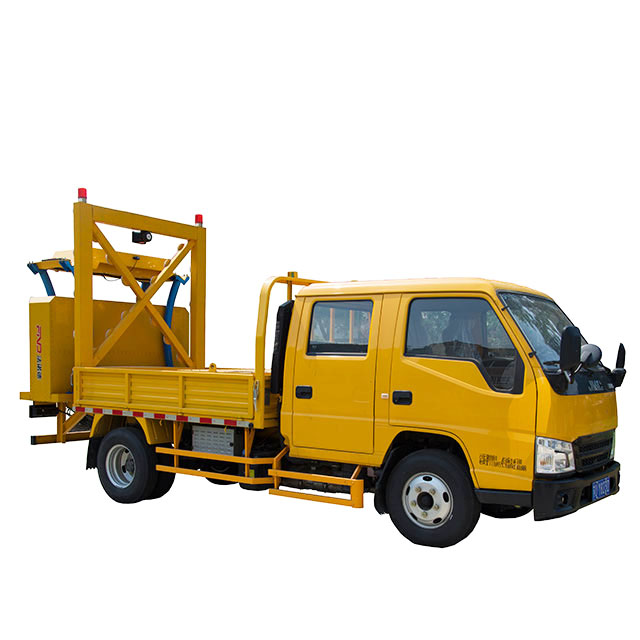
Work zone safety requires matching the right tool to the project duration. We can easily contrast mobile crash cushions with traditional Jersey barriers. Concrete barriers offer excellent protection, but they are heavy and time-consuming to place. They make sense for static projects lasting three days or more. However, modern highway maintenance relies on constant movement. Crews handle line striping, pothole repair, and guardrail maintenance. These tasks require immediate "portable positive protection." A shadow vehicle rolls into place in seconds, providing instant cover for short-term and moving operations.
Traffic flow continuity is another massive operational advantage. Mobile units minimize traffic disruption significantly. If a lane needs to reopen quickly for rush hour, you simply drive the truck away. Concrete barriers require cranes, flatbeds, and hours of labor to remove. By clearing lanes faster, you reduce the secondary congestion that frequently triggers rear-end pileups upstream from the work zone. Keeping traffic moving is a proven method for keeping traffic safe.
Beyond physical impacts, these vehicles excel at high-visibility preemption. A physical strike is a worst-case scenario. The first job of this equipment is visual deterrence. Heavy-duty reflective signage and brilliant LED arrow boards integrate seamlessly into the rear framework. They act as massive beacons. These displays warn distracted drivers from a great distance before a physical impact ever becomes necessary. We rely on this visual preemption to wake up fatigued drivers and force early lane changes.
Consider the differences in application below:
Protection Type | Deployment Speed | Ideal Project Duration | Traffic Impact |
|---|---|---|---|
Concrete Jersey Barriers | Hours to Days | Long-term (3+ days) | High (permanent lane closure) |
Mobile Crash Cushions | Immediate / Seconds | Short-term / Mobile | Low (moves with the crew) |
Safety is an ethical obligation, but it is also a financial imperative. The cost of inaction is simply too high for modern contractors to ignore. We must look at the stark financial realities. The average direct financial liability of a single work zone fatal accident hovers around $1.4 million. This staggering figure only covers direct costs like medical payouts, immediate legal settlements, and OSHA fines. It completely excludes indirect damages. Indirect costs include shattered corporate reputation, skyrocketing insurance premiums, and lost future bids.
Operating compliant equipment provides defensible compliance. When you utilize hardware that strictly meets the latest federal standards—such as MASH (Manual for Assessing Safety Hardware) or NCHRP guidelines—you build a strong legal fortress. If a tragic accident does occur, demonstrating that you deployed federally certified safety assets provides a robust defense against gross negligence claims. You prove that your company took every scientifically backed precaution available.
Asset preservation offers another layer of financial protection. Paving machines, bucket trucks, and specialized drilling rigs cost hundreds of thousands of dollars. They take months to replace. By taking the destructive hit on a replaceable rear cartridge, you save your core fleet assets from being totaled. You avoid massive operational downtime. Replacing a crushed aluminum cartridge takes days. Replacing a custom bucket truck takes a year. Protecting your primary equipment keeps your business running.
Hardware is completely useless without competent human positioning. An improperly parked shadow vehicle offers a false sense of security. We must introduce the critical concept of "roll-ahead distance." This metric defines the exact space a heavy truck will slide forward upon impact. When a 5,000 lb SUV strikes the rear of your truck at 70 mph, the truck will lurch forward violently. If your crew stands too close, the very vehicle meant to save them will strike them.
You must establish data-backed buffer zones based on traffic speeds and vehicle weights. The Federal Highway Administration (FHWA) provides strict standard guidelines to prevent these secondary tragedies. Proper buffer zones save lives.
Speed vs. Buffer Distance Summary Chart
Operation Type | Traffic Speed | Minimum Recommended Buffer Distance |
|---|---|---|
Static / Fixed | Under 45 mph | 74 feet |
Dynamic / Mobile | High-speed (65+ mph) | 172 feet |
Beyond spacing, rigid chassis requirements dictate survivability. We strongly warn buyers against dangerous equipment shortcuts. A proper shadow truck requires a 20,000 lb minimum gross weight to resist extreme forward roll. You cannot simply bolt a cushion onto a lightweight pickup truck.
A crucial safety note applies to ballasts and braking systems. Never use loose concrete blocks as dead-weight ballast in the truck bed. Upon a violent highway-speed impact, loose concrete blocks instantly become deadly projectiles. They will launch forward into the cab or out onto the active highway. Always use bolted, engineered steel plates for weight. Furthermore, mandate the use of air brakes over hydraulic brakes. Air brakes possess a fail-safe mechanism. If an impact severs the brake lines, air brakes automatically lock up and stabilize the vehicle. Hydraulic brakes fail entirely when severed, turning the truck into an unguided missile.
Sourcing life-saving equipment requires deep due diligence. Do not rely on marketing brochures alone. You must actively evaluate the engineers building your systems.
Demand Certification Verification: Always advise your buyers to demand written proof of MASH crash-test certifications. A reputable Truck Mounted Attenuator manufacturer will eagerly provide documentation showing exactly how their systems performed under independent federal testing. If a vendor hesitates to produce MASH certificates, walk away immediately.
Ensure OEM Parts and Lifecycle Support: You must avoid aftermarket parts when repairing safety gear. Inferior, cheap components cause heavy reflective signs to sag, drastically reducing driver visibility. Worse, non-OEM bolts and struts compromise the delicate crush zone structural integrity. Ensure the manufacturer guarantees long-term original equipment manufacturer (OEM) part availability. When an accident happens, you need factory-spec replacement cartridges delivered quickly.
Look for Future-Proofing (ATMA Integration): The future of highway safety is automated. Forward-thinking manufacturers are currently developing Autonomous Truck Mounted Attenuators (ATMA). These robotic vehicles use V2V (vehicle-to-vehicle) "electronic breadcrumbs" to follow a primary work vehicle automatically. Evaluating a vendor with an ATMA roadmap ensures you are investing in a partner committed to innovation. Eventually, this technology will completely remove the human driver from the highest-risk seat on a job site.
Mobile crash cushions transition highway work zone safety from passive hope to proactive, engineered defense. They utilize advanced physics to bleed off lethal energy, actively protecting road crews and distracted motorists alike.
Evaluating this equipment requires looking closely at impact ratings, strict compliance protection, and the operational mobility they provide your crews. You are investing in a comprehensive liability shield that keeps your projects moving safely.
Before placing your next equipment order, take these actionable steps:
Conduct a thorough site speed assessment across your upcoming projects to determine proper impact ratings.
Audit your current fleet to ensure shadow vehicles meet the 20,000 lb minimum weight and utilize air brakes.
Consult with a certified manufacturer to spec the exact chassis and cushion combination required for your specific highway operations.
A: Fixed attenuators are static installations found at highway off-ramps, bridge pillars, or toll booths. They often use foam blocks or hydraulic cables to absorb impacts. TMAs are entirely mobile systems. Operators attach them to the rear of heavy "shadow vehicles" to protect moving crews or temporary work zones on active highways.
A: Yes. While the upfront capital expenditure is notable, absorbing a single major collision prevents the total loss of expensive primary fleet vehicles. More importantly, it protects your business against multi-million dollar worker's compensation payouts, OSHA fines, and devastating negligence liabilities.
A: An Autonomous Truck Mounted Attenuator (ATMA) utilizes a leader-follower V2V communication system. It automatically follows a primary work vehicle without human intervention. This removes the human driver from the most dangerous seat on a job site. It completely eliminates human error, such as the natural flinch or swerve instinct during an impending crash.


